Bring on the Night: Take a tour of the universe from these Georgia dark sky destinations
As an armchair stargazer who doesn’t own a telescope, I’m lucky. My home in the rural Piedmont of east Georgia sits equidistant between three dark sky viewing spots where public events are held by real-deal astronomers with powerful lenses.
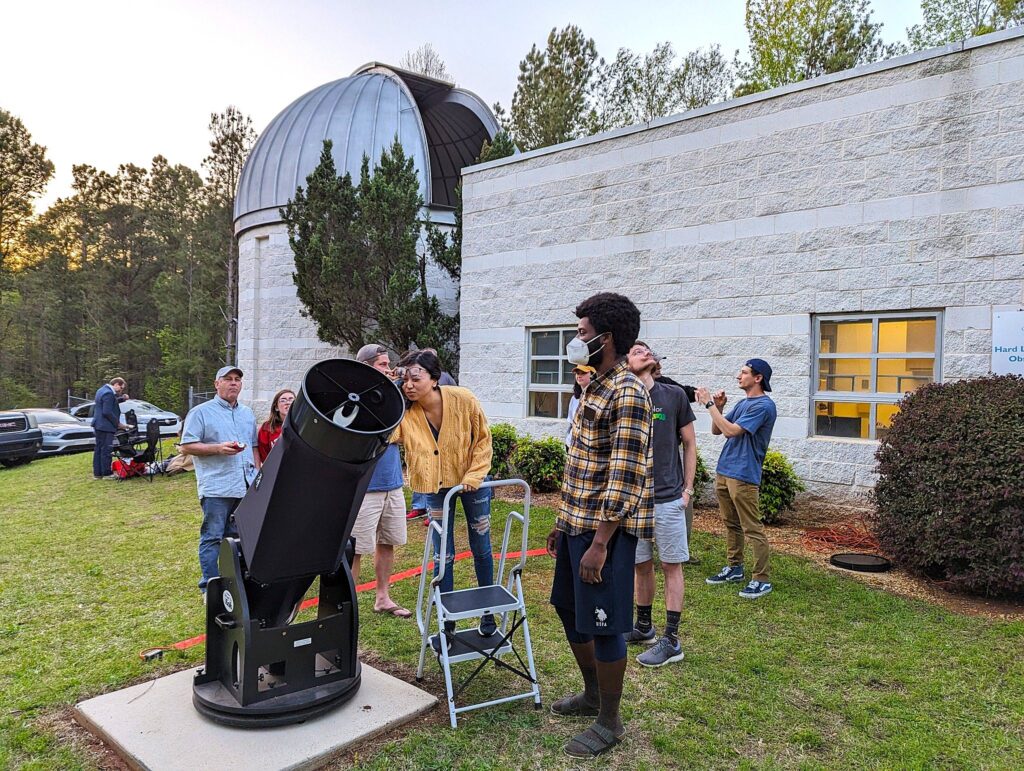
Within a 40-minute drive of my house in Georgia’s Lake Country there’s Deerlick Astronomy Village in Taliaferro County — one of the least-populated counties east of the Mississippi — Hard Labor Creek Observatory at Hard Labor Creek State Park in Rutledge where Georgia State University offers a monthly program, and the Jon Wood Astronomy Field at the 6,700-acre Charlie Elliot Wildlife Center south of Mansfield where the Charlie Elliot Astronomy Club meets monthly and welcomes visitors.
Grier’s Field
On a brutally cold night last winter, I made my first visit to Deerlick Astronomy Village.
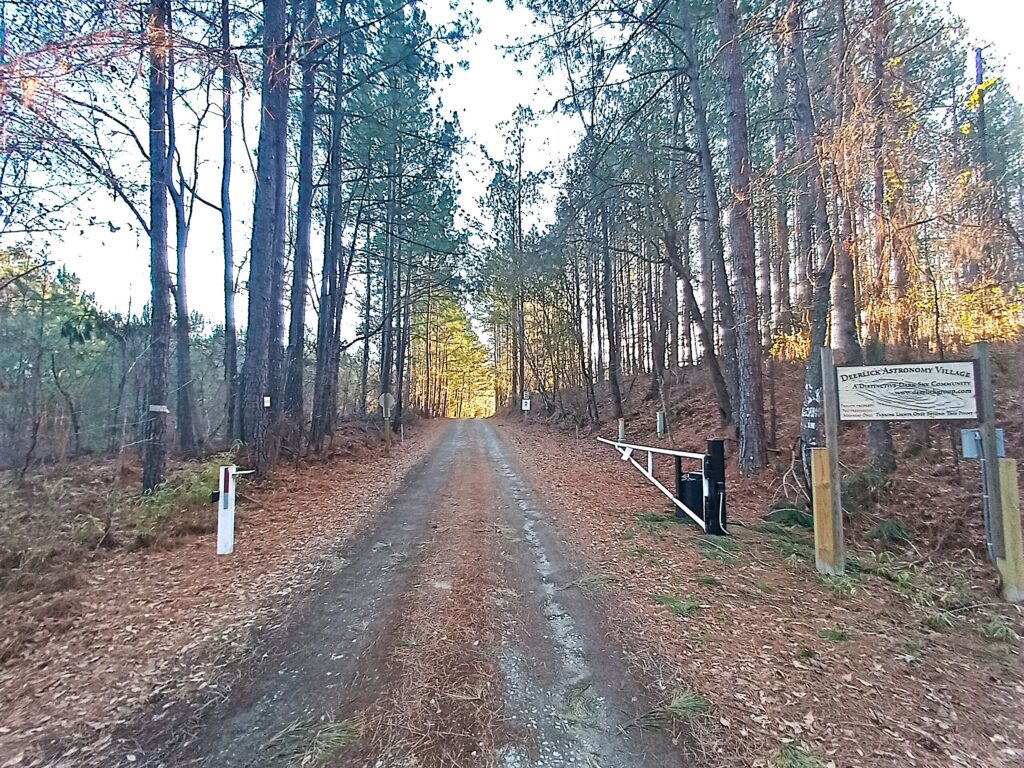
A grouping of about 20 deer served as an unofficial welcoming committee when I arrived just before sunset. The deer scampered a few feet away and continued munching on field grass, unconcerned by my slow-moving vehicle. Deerlick, a private, gated community of astronomy buffs founded by members of the Atlanta Astronomy Club in 2004, isn’t named after the local deer but a grouping of galaxies in the Pegasus constellation.
There are no streetlights, the roads marked by ankle-high red LED lights, no floodlights on the houses, and blackout curtains to block out inside light. You must drive with parking lights on after dark. Many of the one-story structures (no second levels allowed) have retractable roofs where a button is pushed and the inside ceiling rolls away to reveal a ceiling of sky above. These people take their stargazing seriously.
“I’ve seen a lot of sunrises in my time here,” said Erik Benner, a co-founder and part-time resident, when I found him standing in the driveway of his house.
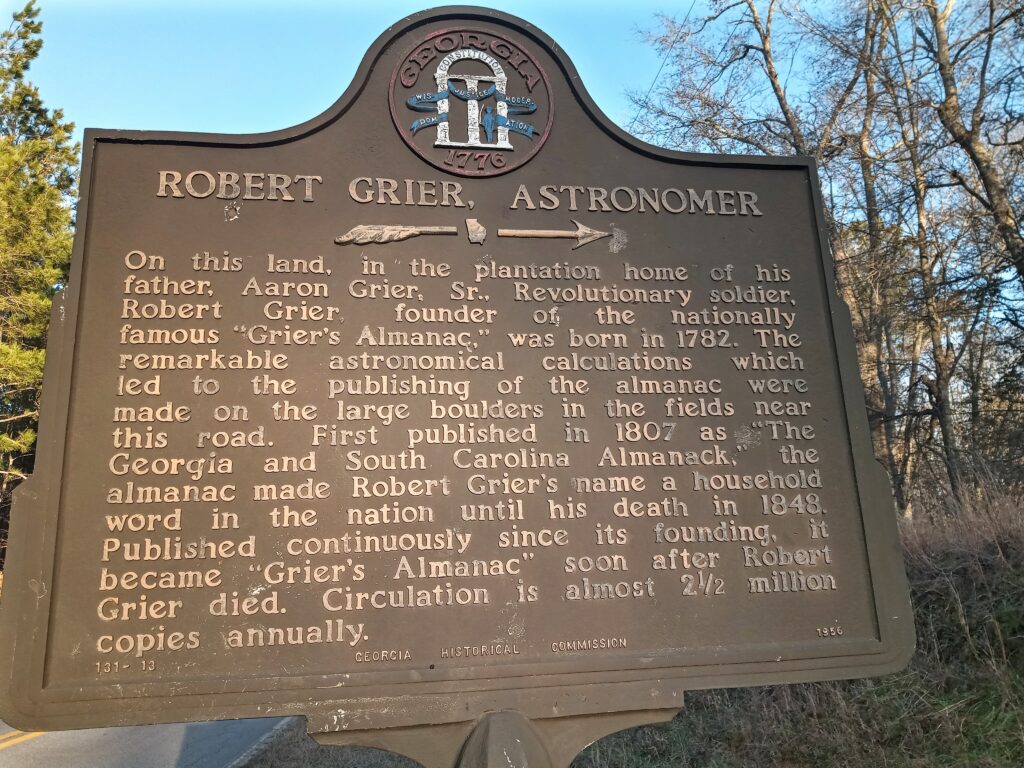
Benner took me to Grier’s Field, named after the astronomer and founder of “Grier’s Almanac” Robert Grier who used to make astronomical calculations here in the early 1800s. Grier’s Field is where Deerlick members who aren’t residents camp overnight. It’s also where events open to the public are held, most notably the week-long Peach State Star Gaze each October (registration required).
As the sun set and our eyes adjusted, the star show unfolded to our naked eyes in a dazzling array. Benner pointed to the Pleiades cluster and asked me how many stars I saw. “Four, oh, wait, five,” I said. He told me to keep my eyes on the same spot for a few more minutes as the sky got darker. Slowly, many more points of light appeared, as did the constellations of Orion and Taurus. On it went until it was like we were blanketed with stars and galaxies.
The only other person in Grier’s Field on this bone-chilling evening was a car camper named William from Peachtree Corners who walked up to say hello. He told us he was there to do some imaging that couldn’t be done from his suburban home two hours away. Amateur astronomy isn’t just about looking through an eyepiece anymore, I soon found out. These days, it’s as much about imaging with expensive equipment and time-lapse techniques.
Though Deerlick is a membership community, Benner said that the annual membership fee for accessing Grier’s Field is about the same as spending one night in a KOA campground.
After leaving the field, he took me to his private observatory where a current dark sky map of Georgia was displayed on a large computer screen.
Deerlick showed up as the darkest color on the map, with encroaching light pollution from the nearest big city, Augusta. The other stand-out dark spots were in the mountains to the north and the southeastern corner of the state.
“We’re in one of the darkest spots on the East Coast, outside of being in a swamp,” said Benner.
I knew which swamp he meant.
The Okefenokee
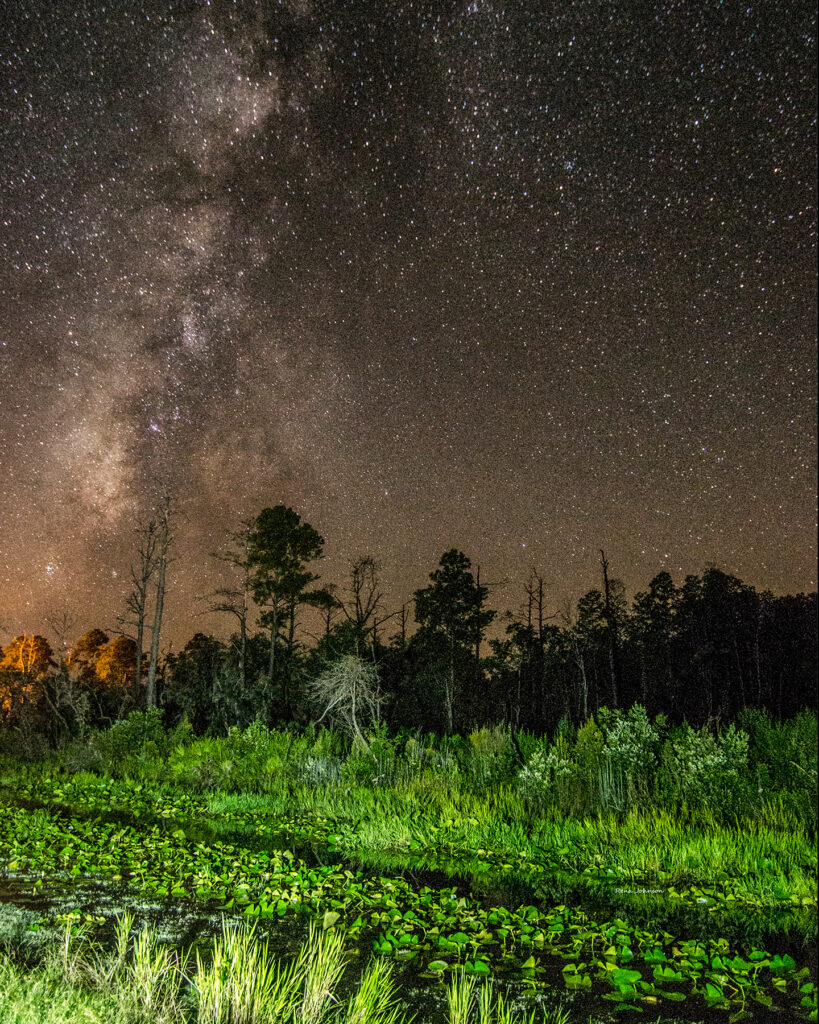
On any dark sky map of Georgia, the Okefenokee clearly stands out for having the largest patch of darkness. It’s a roughly 400,000-acre patch, with no light pollution, protected as the Okefenokee National Wildlife Refuge. In the heart of the wildlife refuge, Stephen C. Foster State Park serves as a primary access point for humans. In 2016, the park was named a Gold-tier International Dark Sky Park by the International Dark Sky Association, the first such accreditation in Georgia.
“We pride ourselves on being a dark sky-designated park,” said Lucy Walker, an Interpretative Ranger who leads astronomy programs for visitors. When I told her I didn’t own a telescope, only a pair of binoculars, she said, “the average visitor to the park isn’t bringing a telescope, they’re viewing with the naked eye … I’ve had people drive three hours just to see the sky at night here, and then drive home.”
The gate to the refuge closes at 10 p.m., so plan accordingly, even if you’re staying at the park’s Suwannee River Eco-Lodge, because it’s outside of the gate in the nearby town of Fargo 18 miles away. Inside the gate, there’s a freshly renovated campground with tent and RV sites next to a raised field that provides a good nighttime view of the sky. Another good viewing location is the overflow parking lot across from the visitor center where astronomy programming takes place in a more open area with less interference from the tree line.
Walker suggested that the best times to visit are during new moon phases, in late summer to see wondrous views of the Milky Way, and wintertime when it gets darker earlier, the atmosphere is crisper and there are less bugs.
For those who aren’t used to life in a swamp, half of the wildlife in the Okefenokee are nocturnal, so it can get loud with all the frogs, crickets, owls and other critters. “The decibel noise is like an alarm clock going off,” warned Walker.
If you’re camping out, bring some earplugs to help you sleep if you think constant wildlife noise will be a problem, along with some bug spray.
Brasstown Bald
From the one of the lowest spots in the state to the highest, Brasstown Bald has something in common with the Okefenokee: remoteness with the darkest of skies. At 4,784 feet, it also puts you slightly closer to the stars than in the swamp. The Atlanta Astronomy Club, in partnership with FIND Outdoors which operates the site, occasionally hosts events on the observation deck called “Gazers of the Galaxy” where expert astronomers with high-end telescopes take participants on a tour of deep space. Check the AAC website for these and other public events, including the ones at the Charlie Elliot Wildlife Center and Deerlick Astronomy Village.
If you can’t make a hosted event, Brasstown Bald is always open to the public, even at night after the facilities are closed and all the lights are turned off (importantly). The restrooms are closed, too, but the parking lot has pit toilets for after-hours visitors; don’t forget to pay the parking fee at the drop box. Like at Stephen C. Foster State Park, the parking lot is one of the best viewing areas where many amateur astronomers set up telescopes. You will likely find fellow sky watchers to mingle with on nights when viewing conditions are optimal.
“It’s a fantastic experience, one like no other in the state,” said Jake Tekippe with Wander North Georgia, an outdoor adventure outfitter based in nearby Clayton. “With the continued growth and development across Georgia, it is increasingly difficult to find true dark zones. Brasstown Bald provides one of the clearest views of the night sky on the East Coast with true 360-degree views.”
The bald is usually 15-20 degrees colder than the surrounding area, so bring layers, even in summer. In winter, if there’s a threat of ice or snow, the gate for the road leading to the parking area will be closed.
The hike from the parking lot to the observation deck is only 0.6 miles and paved, but “don’t be fooled,” said Tekippe. “It’s very steep and can be quite strenuous. Make sure you’re up for the task and bring water and snacks, especially if you plan on hanging around for a while at the top.”
A good flashlight with fully charged batteries and red light capability is vital, he stressed. “The red light is less obtrusive and doesn’t impair your vision as much in the dark.”
I know from experience that using red light will keep you in the good graces of your fellow stargazers, so don’t go into that good night using white light unless you want to make enemies real fast.
Back Home
I walked into my backyard late at night. The view may not be as wonderful and expansive as the ones at Deerlick, in the Okefenokee, or atop Brasstown Bald, but I have my trusty binoculars and a copy of National Geographic’s “Backyard Guide to the Nighttime Sky.” The guide tells me that modern binoculars are stronger than the telescopes Galileo used in the 17th century when he made his legendary discoveries. So I’ll keep looking up, especially when it gets dark outside.