If you’re staying in Forsyth and have a couple of hours, I highly encourage you to take Juliette Road over to the little town of Juliette. I may be biased given my family’s ties to the area, but there’s just something special about this little spot along the railroad tracks! With just one street, it won’t take long to explore, but there’s a story here that’s worth getting to know.
A Hollywood Scene…
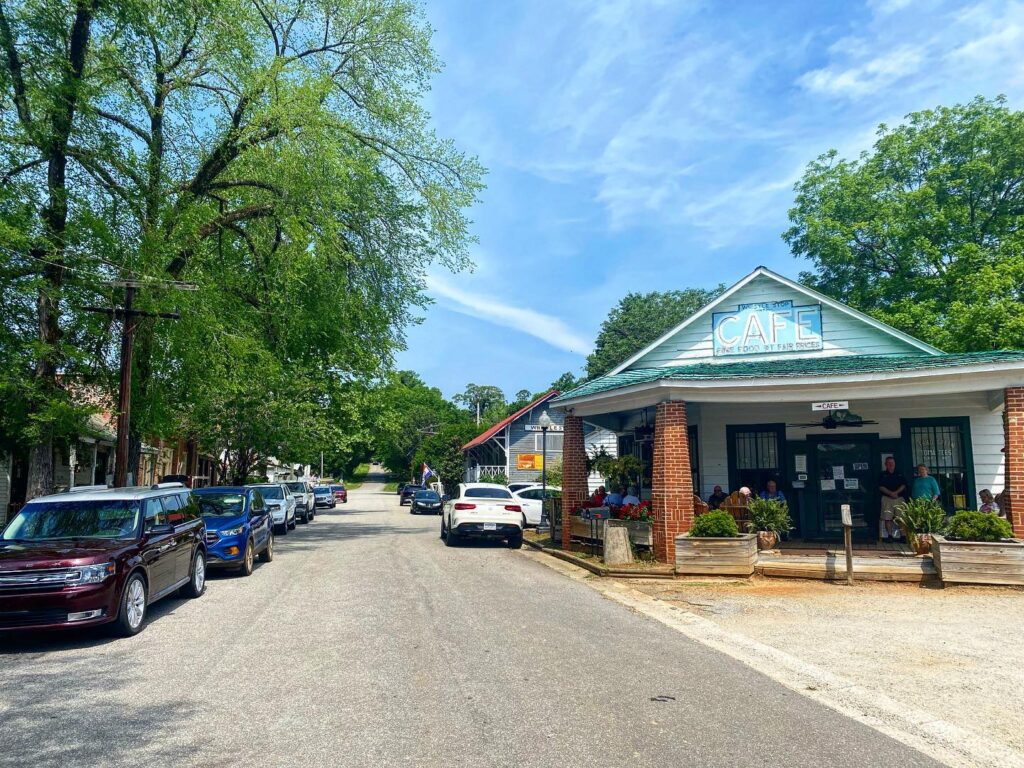
For most people, Juliette is the home of the Whistle Stop Cafe and its Hollywood-famous fried green tomatoes.
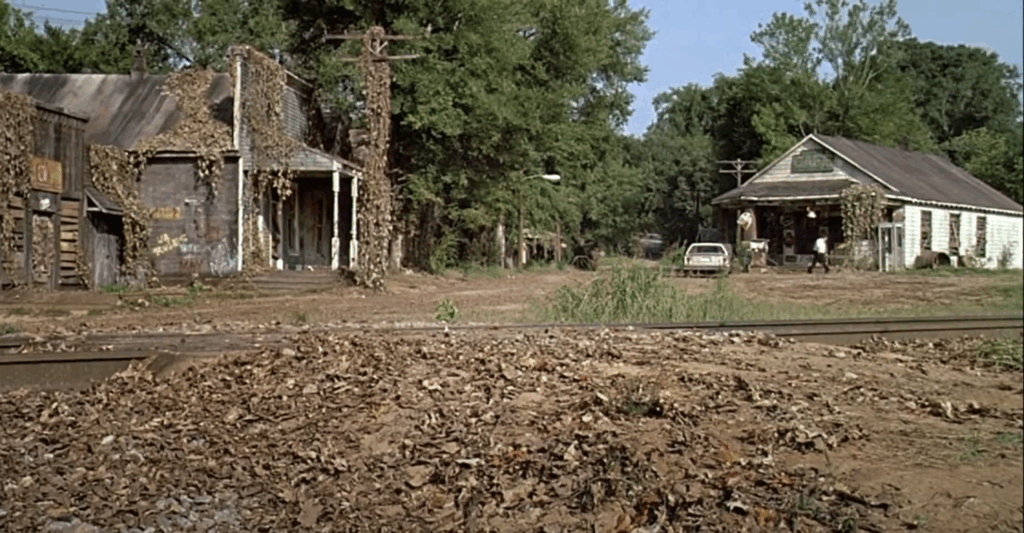
Back in ’91, producer/director Jon Avnet was looking for a location to film his adaption of Fannie Flagg’s Fried Green Tomatoes at the Whistle Stop Cafe. (Great book, if you haven’t read it! I believe it was a New York Times bestseller, and praised by Harper Lee herself!) Well, Avnet found his “Whistle Stop, Alabama” in a nearly deserted Juliette—dilapidated buildings just covered in kudzu, and sitting right off the railroad tracks… It needed some sprucing up, but could most definitely pass for a small 1930s rural town! (It once was one, after all.)

The building that would become the renowned Whistle Stop Cafe was formerly a grocery and hardware store. Redesigned as a cafe, with a horseshoe-shaped counter to allow for optimal camera angles, the building was positioned at the heart of the town as a focal point for the camera and as a symbol of its role in the Fried Green Tomatoes community.
As locals, we all credit Fried Green Tomatoes for bringing Juliette back to life and putting it on the map. Those opening scenes in the movie, showing “Whistle Stop” as a lifeless ghost town? They didn’t have to do much to Juliette for those scenes; they filmed it pretty much the way they found it. (I think they added dirt to cover the asphalt road, but the boarded-up windows? Buildings being eaten up by kudzu? Yeah, that was already there.) Like Whistle Stop in the movie, Juliette was once a bustling little town full of community, but after the mill closed in ’57 and the train no longer stopped at the station, businesses started closing and folks moved away.
Anyway, after the film, which starred such household names as Kathy Bates, Jessica Tandy, Mary Stuart Masterson and Mary-Louise Parker and was nominated for two Oscars, two BAFTAs and three Golden Globes, fans flocked to Juliette. Locals saw an opportunity to renew business in their beloved community. The cafe building was turned into a real, operating cafe serving—you guessed it!—fried green tomatoes and other Southern favorites. Later, an annual Fried Green Tomato Festival was established, and at times even concerts and country jam sessions are held at the set’s “Opry House.”
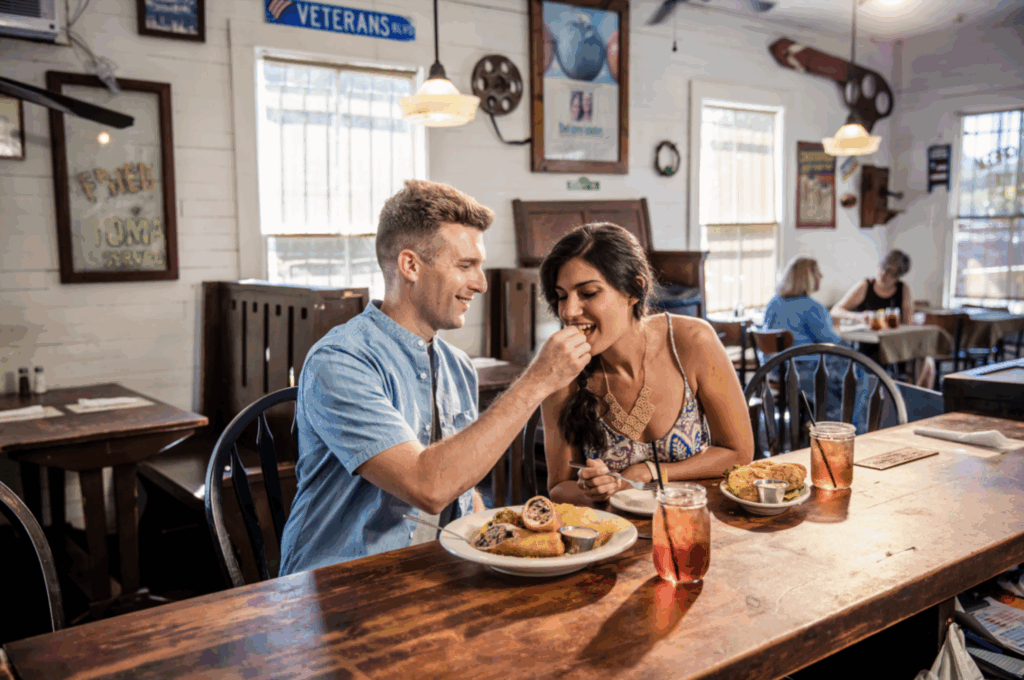
The revitalization of Juliette as a movie destination was a smashing success, and to this day fans come from all over the world to experience the world of Ruth and Idgie. Other films have been filmed in and near the town—a getaway scene from Baby Driver was shot just across the way on the Juliette Bridge, for example. But Fried Green Tomatoes will always be one and the same with Juliette’s legacy.
…Meets Rail Town Roots
Now, I could end my story there…but recall that I said, “Juliette is the home of the Whistle Stop Cafe and its Hollywood-famous fried green tomatoes”—“for most people.”
For me, and I know for many of us locals, Juliette is simply “home.”
For as closely aligned as Juliette and Fried Green Tomatoes’ Whistle Stop are (lending an aura of authenticity that I, for one, credit why the town still resonates with fans after more than thirty years!), they aren’t the same. Under the trappings of the fictional film set, there are real people, real families who have called this little town home for generations—mine one of them. You might not be able to chat with Ruth and Idgie at the Whistle Stop Cafe, but you can with Ms. Liz, the cafe’s current owner. You can get to know Ms. Joann and Mr. Tommy from The Honeycomb, and Frankie Williams whose great-great-grandparents ran Juliette’s general store. A cast of real locals, with real stories to share, and I’d be remiss in telling the story of Juliette if I didn’t introduce you to at least some of them!
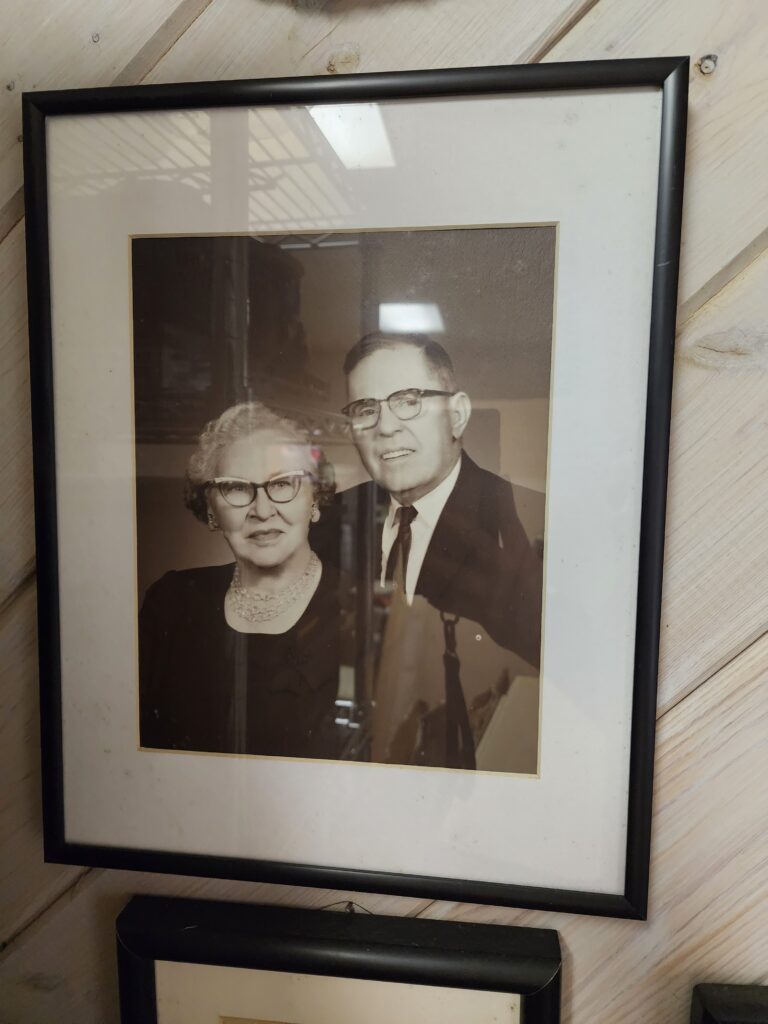
Around the time Ruth and Idgie were running The Whistle Stop in the movie (the 1920s), my great-grandfather, Morgan Bridges, was working as a telegrapher for the railroad out of the Juliette Train Depot. He had a little desk tucked into that big bay window, looking out over the tracks where he could see the trains coming and going. Grandaddy, as we called him, also owned a general store in nearby Berner run by my great-grandma Annie, and later a farm. I grew up listening to stories of ferry crossings (in the days before the bridge), neighbors helping neighbors survive the Depression, and even Grandaddy going head-to-head with the state when they wanted to build Highway 83 through his land (he made them build an underpass for his cows). Their stories helped paint a picture of life in Juliette and Berner as vivid as Fried Green Tomatoes’ Whistle Stop, only better because they really happened!
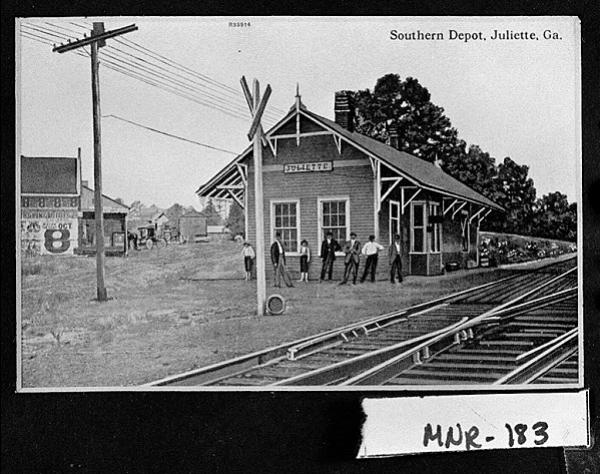
The railroad has always been intricately part of Juliette’s story. Backing up a bit, Juliette got her name when the railroad came through in ’82 (that’s 1882) for Juliette McCracken, the railroad engineer’s daughter. The depot was built soon after, and even today you can’t miss the train that whistles through regularly, though its days of stopping are over. Connecting Atlanta and Macon, the former Southern Railway had a larger-than-normal freight area at Juliette’s depot due to the amount of business generated.
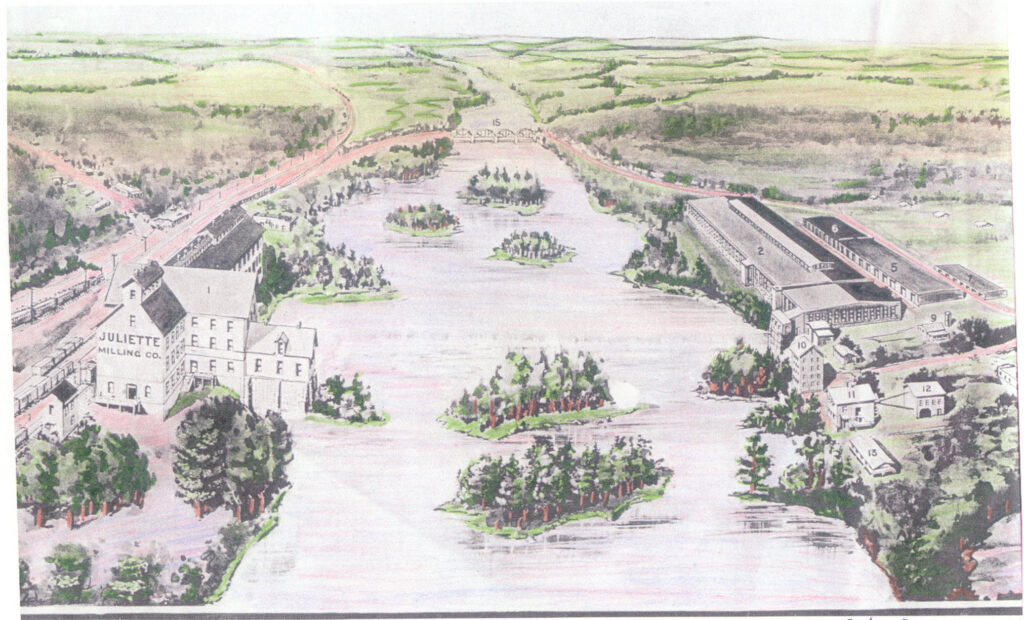
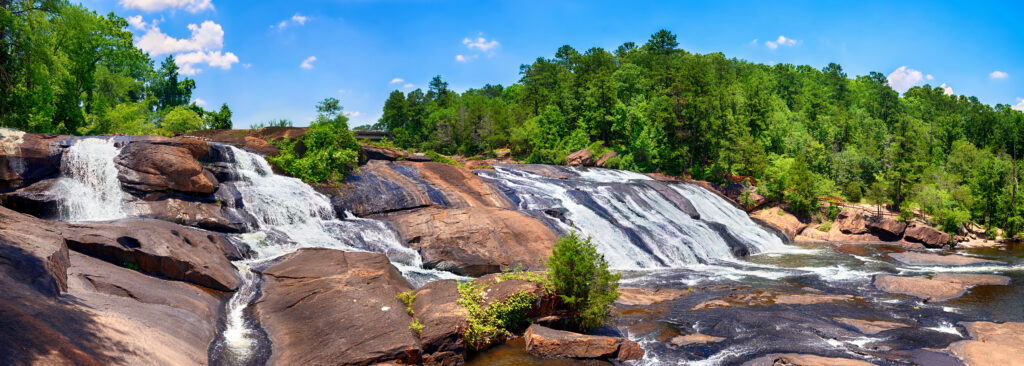
The local mill was a large part of that business. There were actually two mills for quite some time: Dr. Glover’s cotton mill on one side of the river, servicing the local cotton growers, and Joe Smith’s grist mill on the other. Around 1900 Dr. Glover bought the gristmill from Joe Smith’s sons and consolidated the business into one company, the Juliette Milling Company. A log dam (later replaced in the 20s by the concrete one you see today and in the movie) powered the mills, and a thriving, mutually beneficial economy was established.
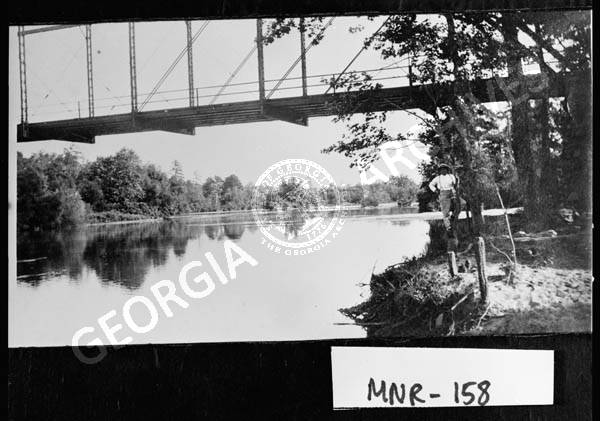
Juliette was happening! A school was built, a church, and a bridge was added in ’07 to help commuters cross the river (the only bridge crossing the Ocmulgee for miles!). Before the bridge, Juliette had a ferry like other towns. Grandaddy used to tell us stories about having to stay in town when the river flooded and the ferry couldn’t run to take him and others home. He’d stay in a little house there on such nights, really a 10×10 room, with a small cot and a stove (and no bathroom). The bridge, which was the only river crossing for miles, was a significant sign of Juliette’s growing success.
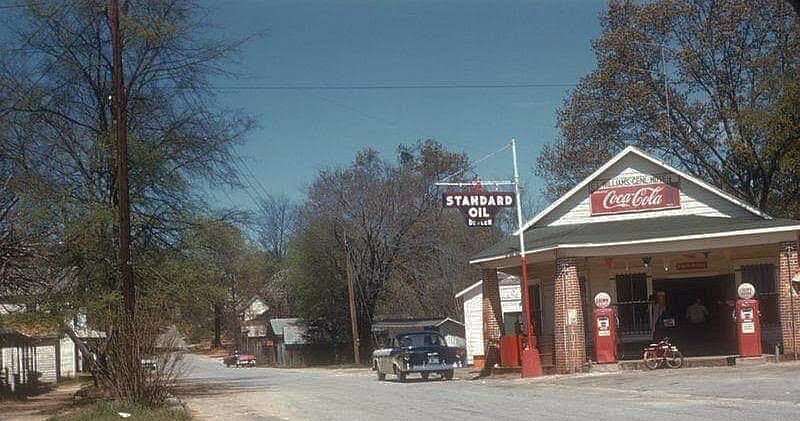
Other businesses began popping up, too. One of the first, built just two years after the railroad came to service them and the mill, was the Williams’ general store. No, this wasn’t the building eventually used for the cafe—that wasn’t quite built yet—but it was a building you’d recognize from the movie: the Opry House, still owned by the family today. By the 20s, many mom-and-pop shops were making a good living. The cafe building was built in ’27 by Edward Williams the elder as a general store selling groceries and staples, gasoline, cattle feed, medication, clothing, even hardware. Ol’ Mr. Edward often said, “We sell everything from the cradle to the grave!,” which Grandaddy found hilarious. His wife, Ms. Lillian, helped run the store and raised six children who all grew up helpin’ in the store, much like my Nana and her siblings at her parents’ store in Berner. His was one of the last stores to do deliveries and allow customers credit, keeping a tab going. He closed the doors in ’72, after running the store for 45 years. It was his descendant, Mr. Robert, who inherited the building and saw the opportunity to turn it into the real-life “Whistle Stop Cafe.” The cafe still has items from the original store (and loads of movie memorabilia) if you have a hankering to check it out!

After industries began to decline in the 50s, the community followed suit. The mill ceased all operations in ’57. The depot, no longer needed, was moved to a field and left to itself. (The film crew actually had to move it to its present-day location, a few buildings down from its original home along the tracks.) One by one, Juliette’s merchants closed their doors. While some locals stayed in the area, finding work at the nearby power plant and in Forsyth, McCrackin Street slept for many years before being discovered and reawakened by Jon Avnet and his scouting crew in ’91. I will be forever grateful Mr. Robert saw a chance to keep the memories of Juliette alive through the lens of Fried Green Tomatoes. The sounds of train whistles, the clanking of the bridge, the roar of the water falling over the dam, of frogs and crickets and children playing baseball games and swimming in swimming holes will live on. “Towanda!”

P.S. I must admit, I don’t know all this history by heart! I had some help from some friendly local sources who asked to be credited:
Sources:
Monroe County, Georgia A History. (1979). Monroe County Historical Society, Inc. Forsyth, Georgia Middlebrooks, Dianne. Middlebrooks researcher
“History of Jones Co., Ga” by Carolyn White Williams, Written by Alline Jarrell. http://files.usgwarchives.net/ga/jones/history/towns/juliette.txt
“Towns of Jones County, GA – East Juliette”, Copyright 2000 Virginia Crilley. https://sites.rootsweb.com/~gajones/juliette.htm
“The History of Juliette”, Copyright 2007 Fried Green Products. http://www.friedgreenproducts.com/juliettega/community/history.asp
“Our History”, Copyright 2024 The Whistle Stop Cafe. https://thewhistlestopcafe.com/history